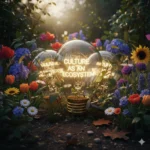
7. Culture Eats Talent for Breakfast

What does it truly mean to “hold the frame” for brilliance? Drawing from over four decades of experience in media, leadership and talent development, Rina Broomberg shares what a life spent working alongside extraordinary talented people has taught her.  These reflections aren’t about any one individual or industry, but rather about patterns observed over the years. And it’s written for those who work close to brilliance - whether they lead it, support it, or live inside its orbit.

Why brilliance thrives or withers - depending on the environment

After years of working with exceptional individuals, I’ve concluded that talent doesn’t fail nearly as often as culture does.

We tend to personalise success and failure. When things go well, we credit the star. When things fall apart, we look for someone to blame – the difficult personality, the wrong hire, the problematic manager. In sport that would probably be the referee or the coach. What’s far less examined is the environment surrounding them – the culture that either supports growth or quietly undermines it.

Culture isn’t the slogans on the wall or the values slide in a board pack or client presentation. It’s what gets rewarded, tolerated, ignored or quietly punished. It’s how disagreement is handled, and whether curiosity is encouraged or treated as dissent. It’s what happens when someone says: “I’m not sure this is working.”

In strong cultures, talented people are stretched but not burned out. They’re allowed to evolve. In weak cultures, brilliance becomes performative. People learn quickly what gets applause and what gets you sidelined. Conformity begins to replace honesty, and chaos replaces reflection…and chaos is confused with productivity.

One of the clearest signals of culture is how it handles tension. Healthy cultures don’t eliminate tension – they contain it. Debate and questions are encouraged. Feedback flows up as well as down. Power doesn’t sit unchallenged – people can say “I disagree” without fear of reprisal.

Unhealthy cultures, by contrast, become fragmented. When a person’s work becomes their identity, disagreement is personalised.  A simple question about strategy may be  received as an attack on character. Over time, the room goes quiet and the real conversations migrate to the corridors, private WhatsApp groups or the carpark, while  the boardroom becomes a theatre of agreement. People stop thinking out loud and conformity may replace honesty. The loudest voices dominate, not because they’re right, but because they’re feared.

I’ve seen this most clearly in creative environments where personality can easily overshadow process, but it’s not confined to those spaces. Attention is drawn to what dazzles. When culture revolves around individuals rather than principles, consistency disappears. What’s allowed today may be punished tomorrow, depending on who’s speaking. By the time the shine fades, the damage has already been done,

Strong culture doesn’t mean “kumbaya”. It means clarity. It can be challenging but people know where they stand. They know where the boundaries are, and they know what matters. They know that the work – not the ego – is central. Strong cultures protect relationships, not by avoiding conflict, but by making repair possible. When mistakes happen – and they always do – the question isn’t “Who do we blame?” but “What do we learn?”.

Ironically most resilient cultures often feel quieter, less dramatic and less performative. They don’t rely on urgency or spectacle to function. In these environments the energy isn’t wasted on politicking or posturing – it goes into the work. Over time, they outperform the flashy ones because they don’t exhaust the people inside them. This is where talent can truly blossom.

Talent is abundant. Sustainable environments are not. While I’ve witnessed mind-blowing technological  advancements over the decades, one lesson that has remained the same is this:

Culture isn’t what you say you value. It’s what people learn pretty quickly around here.

Click below to read the next chapter:

8. Culture as an Ecosystem
Share :

Latest episodes

What decades in media and creative leadership taught me about working with extraordinary talent…

Shows

Democracy Unplugged brings together thought leaders, activists and influencers to untangle the threads of democratic principles, dissect current challenges, and envision what our future could hold.
Join Phumi and guests as they tackle the big stories of the week, dissect the current trends in politics and point you to what the future holds for South Africa and the continent.
Hosted by Justice Malala and veteran political commentator Mondli Makhanya, the show cuts through the noise with insight, honesty, and the kind of chemistry you only get when hosts actually love the conversation.
What does it truly mean to “hold the frame” for brilliance? How we do we navigate the fine line between celebrating brilliance and not allowing it to become self-destructive? Drawing over four decades of experience in media, leadership and talent development, Rina Broomberg shares her reflections on talent, power, freedom, culture and balance. This is not about any one individual or industry, but rather about patterns she’s seen repeated across decades working with exceptionally talented people. And it’s written for those who work close to brilliance – whether they lead it, support it, or live inside its orbit.
Empowering South Africans to be a force for good in society and their personal lives.
Timothy Maurice Webster explores brain insights and behavioral science to enhance personal and professional growth.
“Talking Psychiatry” is hosted by Christopher Paul Szabo. He is a psychiatrist and an emeritus professor in the Department of Psychiatry at the University of the Witwatersrand as well as the editor-in-chief of South African Psychiatry. He was the host of the “Beyond Madness” podcast which can be found on Spotify as well as Google and Apple podcasts.
Diverse hosts and guests delve into open, honest conversations on a range of topics to inform, inspire, and connect people globally.
The SA National Election is over, the GNU has been formed, so what now? Bafana Modise is back in studio to talk to the youth leaders of political parties.
Life moves fast. Stress is everywhere. But what if there was a way to pause, reset, and approach life with more clarity and calm? “Stress Less, Live More – Powered by Zembrin®” is your go-to guide to answer that, and navigate modern life with more ease, focus, and mental wellness. Join Siya Sangweni and HG&H Pharmaceuticals’ Dr Ralph Tettey-Amlalo to unpack lifestyle changes that can help mitigate stress and anxiety, and how Zembrin® can support that.
Join award-winning journalist Jean-Jacques Cornish and Gareth Cliff as they explore events and trends in Africa with insightful discussions.
Join us as we explore the authentic narratives, valuable lessons, and remarkable journeys of visionary individuals who’ve carved their unique path in the business landscape.
Rise Resilience is rooted in the belief that resilience is the key to thriving in the face of life’s challenges.
Understand democracy worldwide with insights, expert interviews, and real-life stories aimed at empowering better voting decisions.
Bringing Sandton’s top stories to life with interviews, entertainment, and updates from Africa’s richest square mile.
Dr. Mark discusses medical lifestyle topics with experts, offering insights into health and well-being.
This current affairs podcast hosted by Jonathan Witt and Kanthan Pillay seeks to discuss and challenge those topics which fall within acceptable discourse, while introducing and expanding on ideas outside of the “Overton Window”.
Experts share the truth about South African and global politics, providing clear insights.
Join Jack Motlanthe every Tuesday morning for a journey through engaging topics from 7am-9am.
Podcast party presents interviews with influential individuals, exploring their views on various topics.
With his sharp insights and fearless opinions, Penuel shares his analysis of the power plays, policies, and people driving national debates.